
At the 2026 User Conference in Reno, Fire Aside showed agencies from nine states what happened to a year's worth of feature requests. Here's everything that shipped — and what's next.
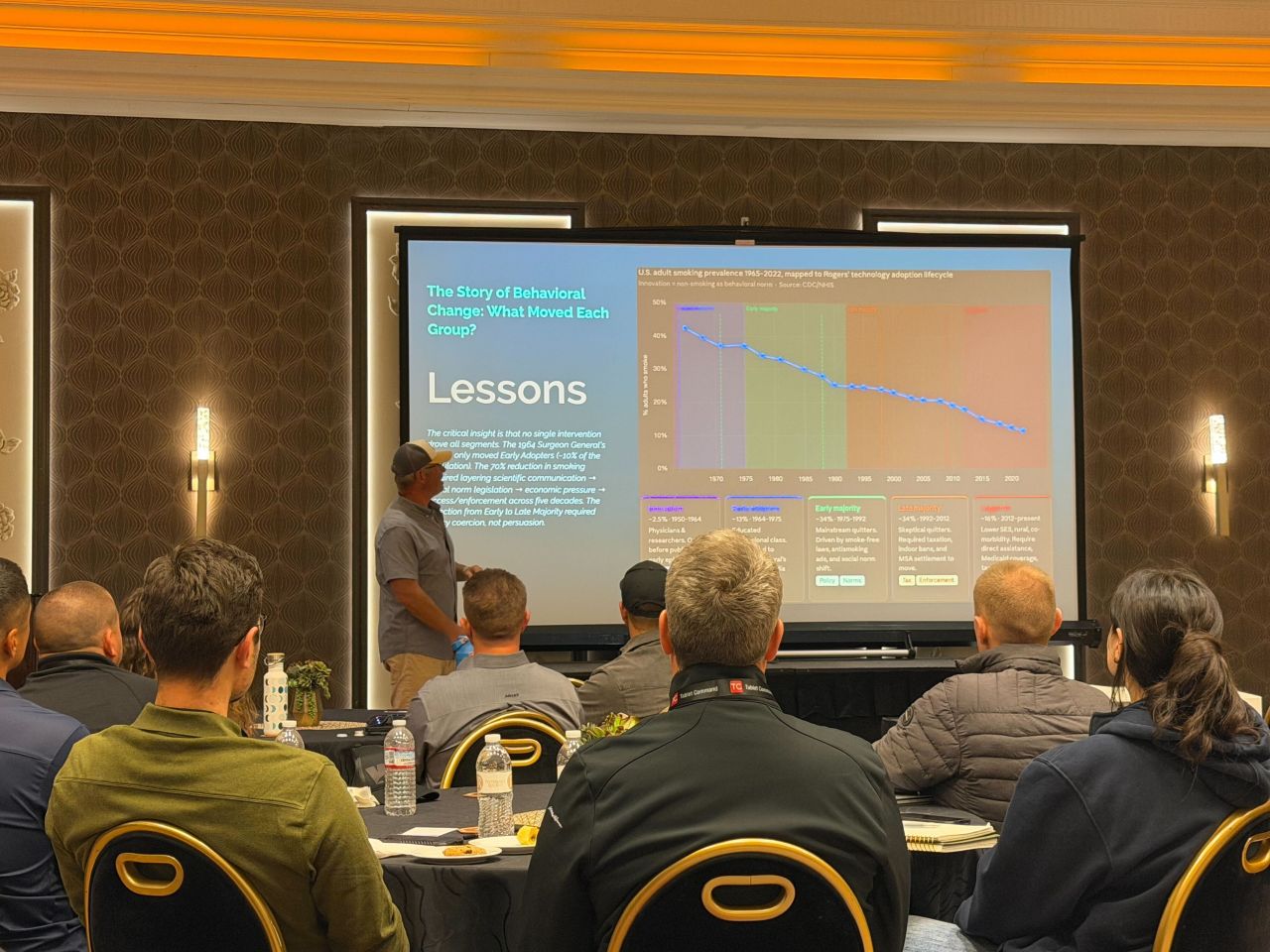
At the 3rd Annual Fire Aside User Conference in Reno, agencies from nine states came together to compare what's working, learn from each other, and share what capabilities they’re looking for to solve problems into the future.
Across those conversations, a few themes kept coming up: moving residents from awareness to action, proving mitigation in ways that matter for insurance, and reducing the operational load on staff. The updates we shared this year are all tied to those pressures.
A rebuilt resident experience focused on action
The updated resident portal is built around increasing resident interactions. It's a full rebuild of the experience — clearer next steps, better integration with local resources, and a structure that encourages residents to come back as they work through mitigation.
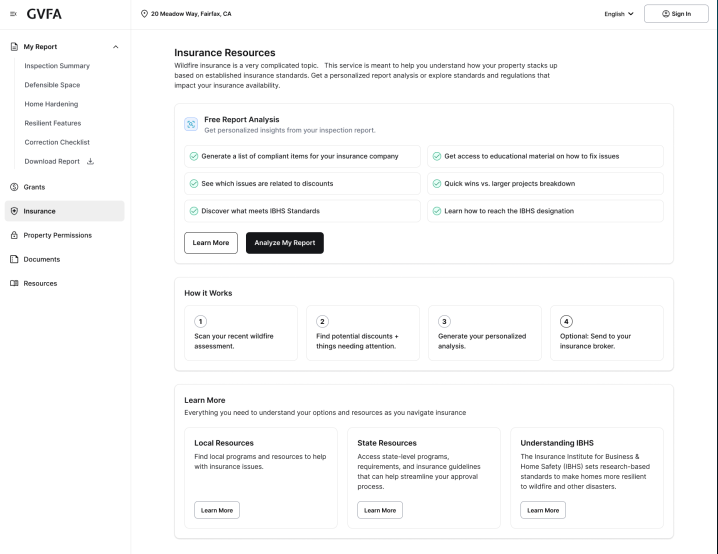
The new insurance module in Resident Portal 3.0 lets residents analyze their report against IBHS standards and understand what may affect their coverage — with a built-in privacy screen so they control what gets shared.
It also previews the new insurance module. Residents can see how their property aligns with IBHS and/or state standards, understand what may affect their coverage or eligibility for discounts, and choose to share that information with their broker if they want to. A data privacy screen is built into the flow so the decision stays with the resident. Given where insurance markets are heading in most of the states we work in, this is quickly becoming part of the conversation.
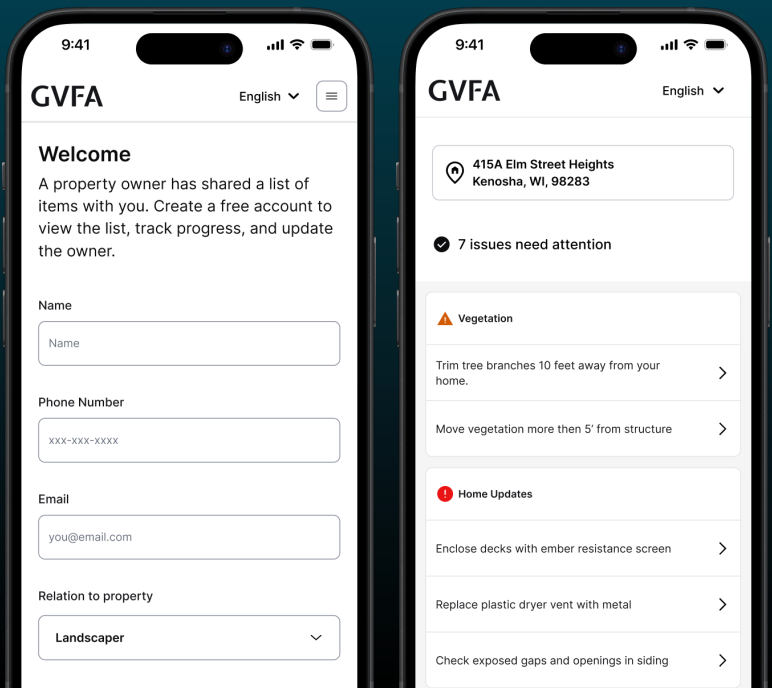
The updated resident portal lets residents share specific items directly with their landscaper or contractor, making it easier to get bids and move toward resolution.
And finally expands on the sharing functionality with dedicated tools for residents to share items with their landscaper or contractor, helping them get bids or resources to resolve their issues.
Reducing friction in the field
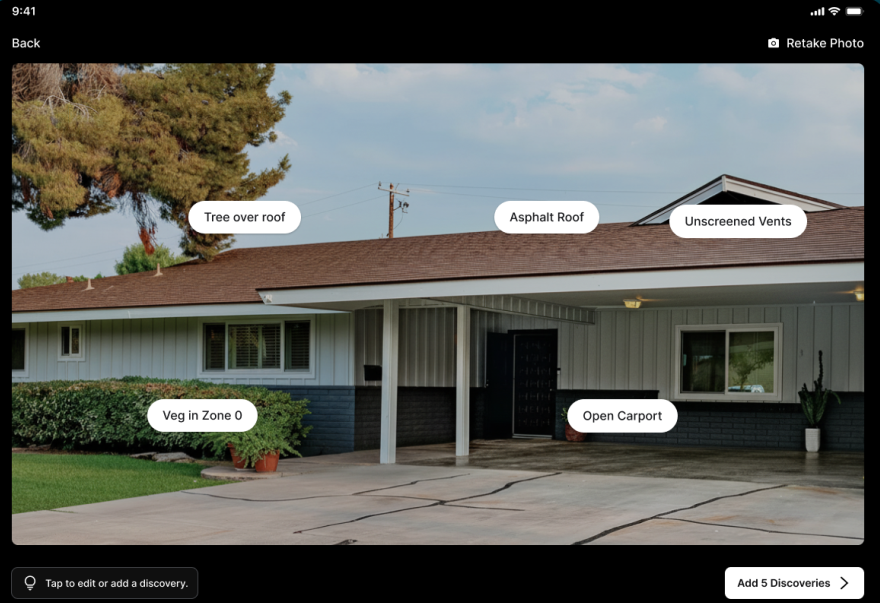
The updated DSI app surfaces related items — historically flagged issues on a property — alongside the current inspection, giving inspectors fuller context in the field.
On the inspection side, the focus was less about new workflows and more about improving the ones agencies already rely on.
The latest version of the DSI app is the most significant field update since launch — faster capture of multiple observations at once, a simplified reinspection and verification workflow, migration to MapBox with expanded layers, and major improvements to battery performance in the field. Related items linking surfaces historically flagged issues on a property alongside the current inspection. Voice-based inspection and photo multi-select are in beta. These changes came directly from inspectors who told us what was slowing them down, and over a full season they directly impact how much ground a team can cover.
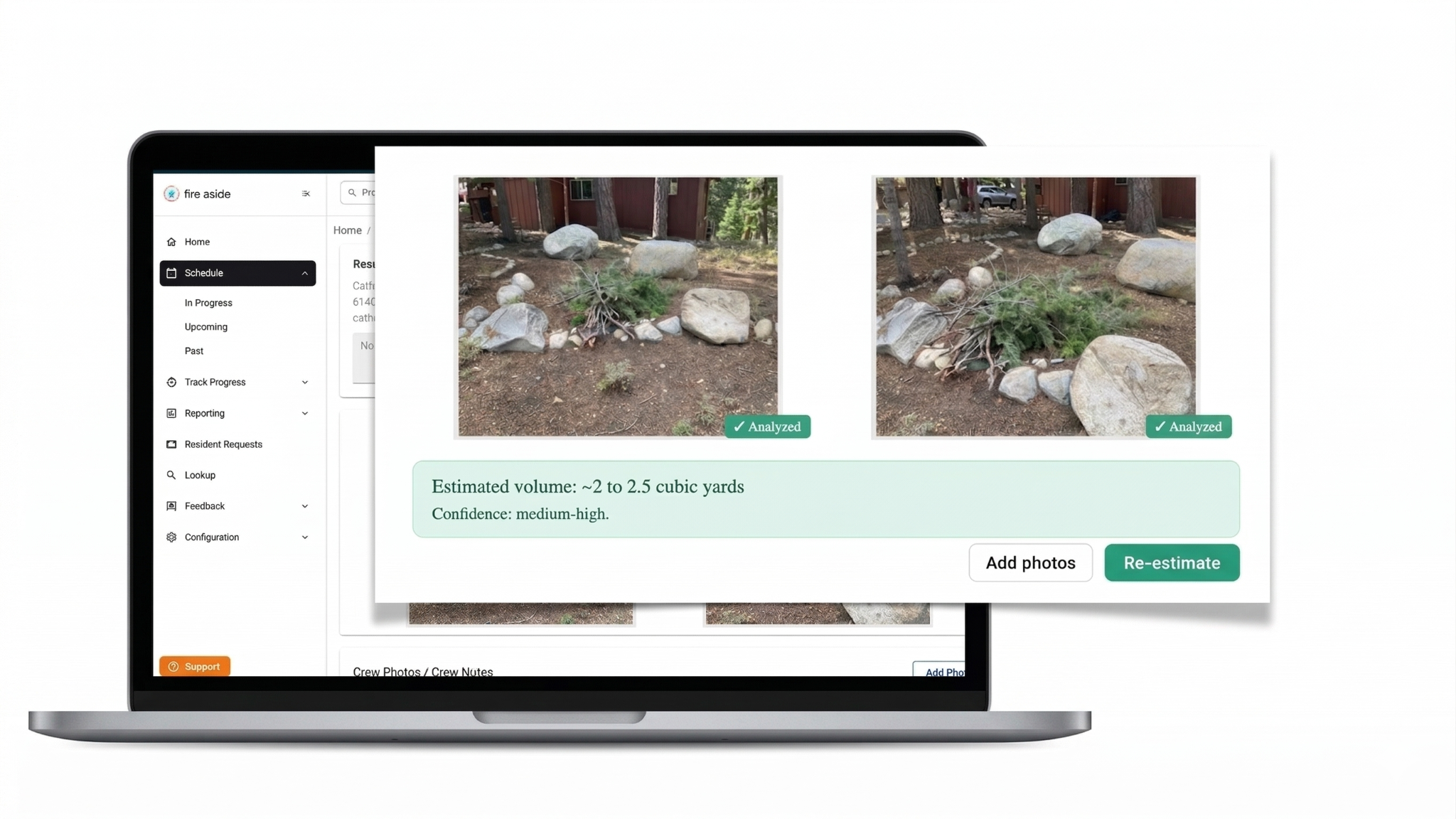 The Chipper Pile Size Estimator analyzes uploaded photos and returns an estimated volume with a confidence level — no manual measurement required.
Some of the most useful updates came from very specific requests. Estimating chipper pile size, for example, is a prototype using photo-based analysis — resident can upload photo(s), and the platform returns an estimated volume with a confidence level. This started from one agency looking for better ways to predict capacity in their trucks to improve routing.
Bringing more of the workflow into one place
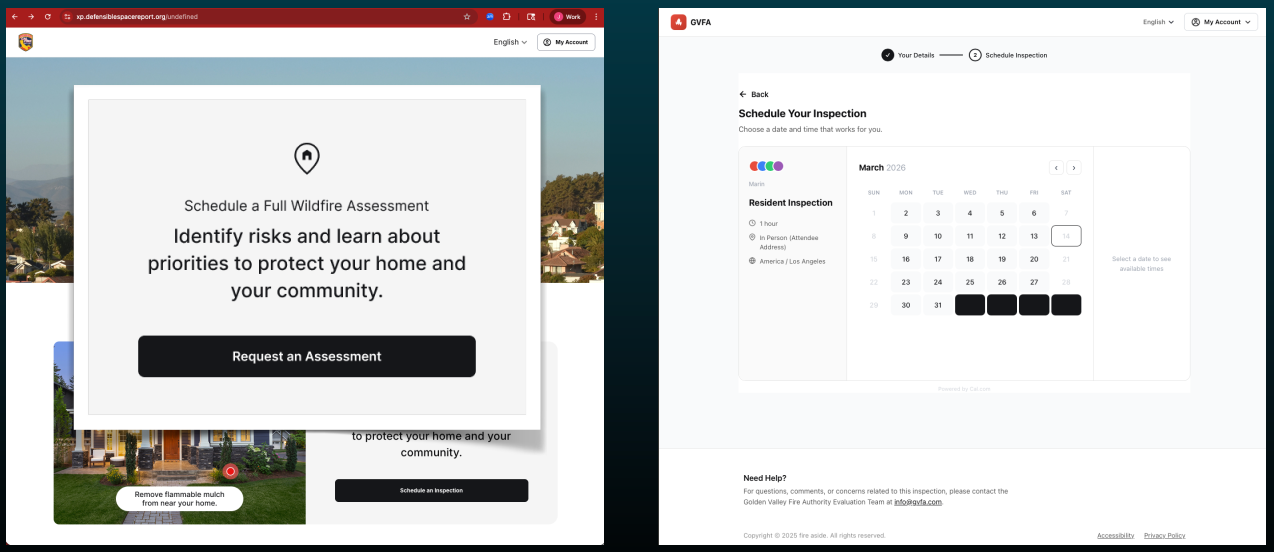
Residents can now book assessment appointments directly through the portal, with available times configured by GIS zone to keep inspector routing efficient.
Scheduling is an area where things have been moving toward consolidation. Many agencies already offer resident booking, but often through separate tools or manual coordination.
The updated scheduling workflow brings that into the platform — residents can book directly through the portal, and agencies can route and assign those requests based on geography and availability. It's a small shift, but it removes a layer of coordination that slows things down.
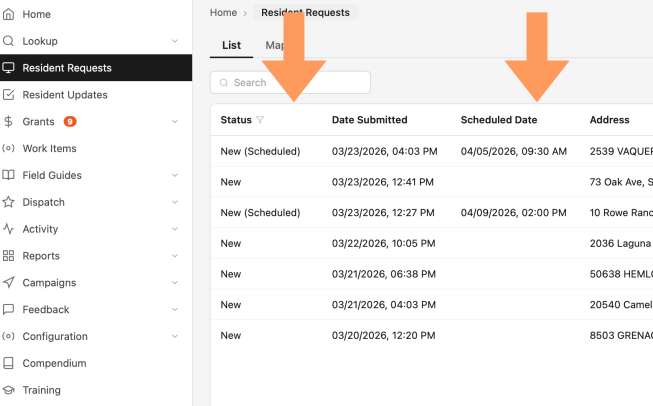
Completed scheduling requests appear in the admin queue for review and assignment to specific team members or dispatch groups.
Closing the gap between work completed and work recorded
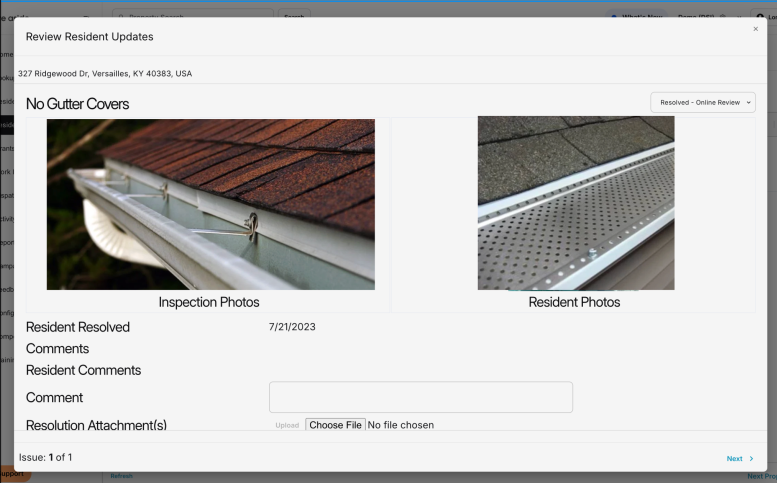
The updated Resident Resolved interface displays inspection photos and resident-submitted photos side by side, making verification faster and more consistent.
One of the more consistent challenges discussed at the conference is underreporting. Many residents complete mitigation work but never formally report it, which makes it harder for agencies to measure progress — and harder to give residents credit for what they've done.
Updates to the Resident Resolved workflow tighten that loop. The review interface now shows inspection photos and resident-submitted photos side by side, making verification faster. Residents are prompted to add new findings discovered during remediation, so the record gets updated rather than just closed. And once an agency confirms the work, an automatic thank-you goes to the resident — a small thing that reinforces that the effort was noticed.
Where this is heading
Across all of these updates, the direction is straightforward. The challenge is no longer getting inspections done — it's turning those inspections into sustained, measurable mitigation.
The tools are increasingly focused on that gap: making it easier for residents to act, easier for agencies to track progress, and easier to demonstrate impact over time. That's what agencies asked for. It's what we built.
Questions about any of these updates? Reach out to your account manager or contact us at support@fireaside.com.
Watch the Virtual User Conference here.