
This fall, Gov. Greg Abbott deployed additional resources across the state to mitigate the ever-growing risk of destructive wildfire risk. This type of preventive work ahead of a disaster — or “left of bang” in disaster preparedness parlance — is a critical step in promoting public safety. 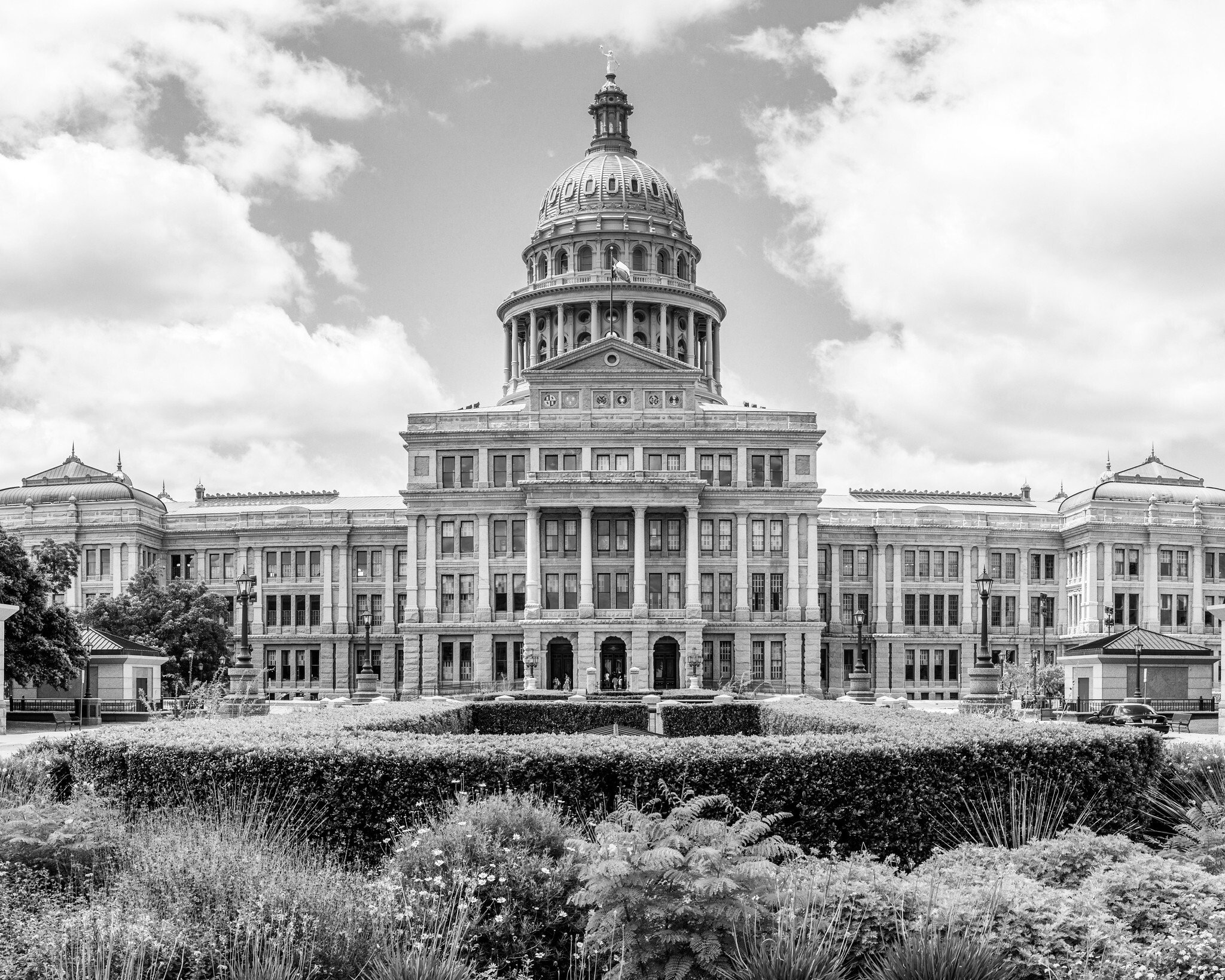
The Texas state capitol building, as seen in 2013. // Photo: Jonathan Cutrer
It is laudable that Texas agencies, notably the governor’s office and Texas A&M Forest Service, are thinking ahead. Even leaders from the City of Austin and Travis County promoted “No-Ember November,” which aims to emphasize the importance of wildfire preparedness.
Fire Aside applauds our two partner agencies – Austin Fire Department and Lake Travis Fire Rescue – who have already been taking thoughtful steps to enhance their prevention efforts in their communities.
But everyone knows the old line: everything’s bigger in Texas.
The Lone Star State should apply this approach to wildfire preparedness, too. Texas should seize this opportunity, as the state moves towards the winter, to start thinking more strategically and comprehensively about its approach to wildfire prevention and mitigation.
Federal and state authorities have long known that wildfire risk is very real in many parts of Texas.
According to the state comptroller’s office, over the last two decades, over 243,000 separate wildfires have burned nearly 14 million acres. Just last year, the Smokehouse Creek Fire scorched over 1 million acres — the largest in state history. Austin and San Antonio, and their surrounding regions, have some of the highest wildfire risk in the nation. Around two-thirds of Travis County’s homes are in the WUI.
But the problem is getting worse and Texas’ approach must adapt.
Last year, the Office of the Texas State Climatologist noted that as a whole the state is getting hotter. As more people come to Texas, many of them are coming to parts of the state where land is cheaper, in the wildland-urban interface (WUI). Meantime, all Texans are quickly discovering that their homeowners’ insurance is skyrocketing.
This year, Texas has already taken some admirable steps both in terms of legislation and local action.
At a statewide scale, Senate Bill 34 created a new study on wildland fuels, and among other additions, provides a statewide database of wildfire-related equipment for the first time. Another bill allows for state fire authorities to inspect electrical power lines at oilfield well sites, and related facilities.
On a related note, this past spring, Austin approved new wildfire protection measures, and redesignated half of all habitable land as being at risk. Newly-built and renovated homes and businesses must now undertake defensible space and home hardening steps to protect against incoming flames and flying embers.
Locally, some agencies like Lake Travis Fire Rescue, conduct free on-site home assessment, helping communities improve resiliency right on their own property. These trained professionals can identify particularly hazardous vegetation, and other risks that can be dangerous.
State lawmakers must adopt new laws that are coming online now in other parts of America: mandating defensible space, creating a non-combustible zone within five feet of a structure. That means removing grasses, mulch, brush and even things like propane fuel tanks, and even burnable doormats as a way to reduce risk. (This approach has been recommended for decades, but hasn’t been uniformly adopted.)
Texans famously value self-reliance and fiscal responsibility: state and local lawmakers should fund more grant programs to reduce costs, more assessments to educate homeowners, and yes, more resources for preventive deployments of state resources as a way to help Texans protect themselves and their communities.
If Texas commits to this visionary approach, lawmakers can both spur economic activity – the labor and materials required to do this critical retrofitting – and save public dollars in the long run. It is far better to invest in our communities ahead of time now, rather than to send out first responders to deal with the fallout of suppressing a fire and supervising the aftermath. (Just ask our friends in California.)
Put another way, if we act left of bang now, we can finally hit upon what’s right for our future.
Jason Key is a sales executive with Fire Aside, and a lifelong Texan who lives in the Dallas-Ft. Worth area.