
Why Wildfire Mitigation Looks Different in Ski Towns
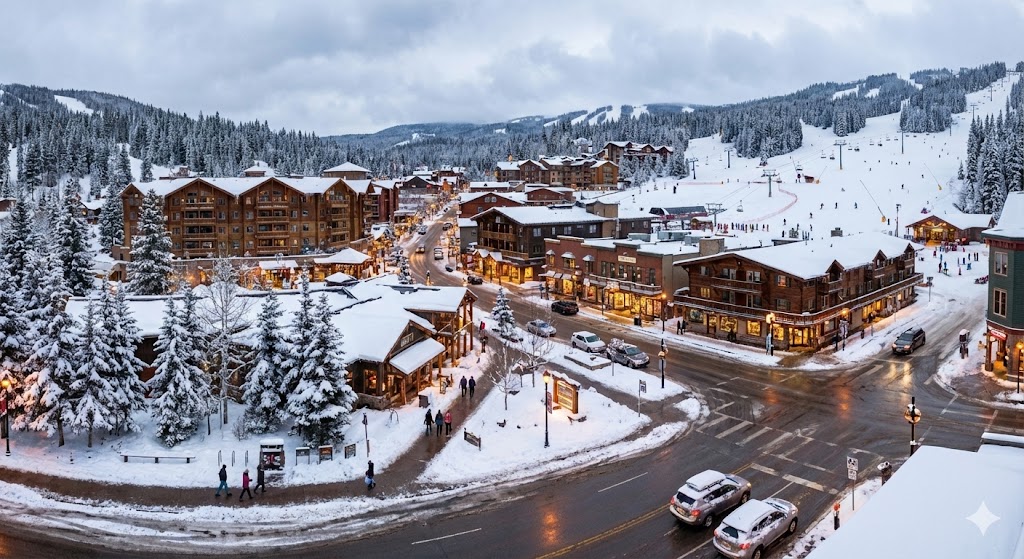
In ski towns, wildfire risk doesn't care about your vacation schedule.
A home can sit empty through August, September, October—the very months when fire risk peaks in the mountains. The inspection window opens and closes. The mitigation work piles up. And the owner? They might be in Denver, San Francisco, or Phoenix, checking their email between meetings, struggling to coordinate defensible space work for a property they won't see again until ski season.
Across mountain and resort communities, fire agencies are working within a shared reality: second- and third-home ownership, seasonal population swings, and residents who care deeply about their properties but aren’t always on site. It doesn't make mitigation less urgent. It just makes it harder to execute.
Seasonal Ownership Changes the Ground Rules
In year-round communities, mitigation happens face to face. Inspections. Community meetings. The neighbor you run into at the hardware store who mentions your pine needles. Follow-up visits that actually find people home.
In ski towns, those moments are fleeting.
Many properties are unoccupied during inspection season. Owners may visit for a long weekend or a holiday stretch. When they are in town, their attention is split between family time, recreation, and a long list of things to get done before heading home again.
And often, the owner isn't the primary point of contact at all. Property managers and HOAs coordinate most of the work—fielding inspection notices, scheduling contractors, and managing mitigation projects on behalf of owners who may be states away. This adds another layer: agencies aren't just working around absent owners, they're working through intermediaries who are juggling dozens or hundreds of properties at once.
This isn't apathy. Many of these homeowners have more equity tied up in their mountain property than most people have in their primary residence. They care. They're just not there.
Mitigation That Works When No One's Home
Because presence is intermittent, engagement in ski towns often needs to be asynchronous by design.
There’s no single formula for what works in seasonal communities. But across ski towns, some of the more effective approaches tend to share a common thread: they reduce reliance on perfect timing and make it easier for residents to engage on their own terms.
In ski towns, waiting for the “right moment” to engage residents often means waiting until they’ve already left.
A couple of practical examples that show up frequently:
- Proactive communication, often via email, that provides clear information and resources without waiting for residents to be physically present
- Securing right of entry ahead of time, which allows inspections and follow-up work to move forward during narrow seasonal windows
These are not requirements, nor are they unique to ski towns. They are representative of a broader shift agencies are making—toward outreach strategies that assume residents may be off-site, busy, or engaging in pieces rather than all at once.
In many ski towns, the inspection report becomes the anchor that ties these efforts together. Rather than serving as a one-time document, it functions as a working reference: something residents can revisit between trips, share with contractors or property managers, and use to plan mitigation work over time.
Supporting that kind of engagement over time often requires more than ad hoc outreach—it requires a deliberate communication structure that can adapt to seasonal realities.
Stewardship, Defined by Practice
In seasonal communities, stewardship isn’t a slogan. It’s a way of working.
A stewardship-based approach starts from a simple premise: residents want to do the right thing—but rarely all in the same weekend.
Operationally, stewardship looks like explaining why specific issues matter for a particular property, clearly identifying what should be addressed first—and what can wait—and giving residents a stable point of reference they can return to over time.
In practice:
- Not: "You have 30 days to clear all vegetation within 5 feet."
- But: "The junipers along your north deck are the highest priority—they're within five feet of the structure and extremely flammable. The aspen grove near the driveway can wait until next season."
This stands in contrast to compliance-first messaging, which often assumes immediate availability and response. For part-time homeowners, enforcement language can feel impersonal or mistimed—especially when notices arrive while they are off-site.
Stewardship framing acknowledges reality. It treats wildfire mitigation as ongoing property care, not a single moment of compliance. And it supports progress even when that progress happens incrementally.
What Ski Town Agencies Are Figuring Out
Ski towns aren't outliers. They are early indicators of a broader shift across the wildland-urban interface, where intermittent occupancy is becoming more common.
Agencies working in these environments are learning that effective mitigation depends on designing programs for residents who aren't always local, treating communication as something that unfolds over time, and using inspection insights as a durable foundation for action—not just a snapshot.
Fire Aside works with many seasonal and ski-oriented communities, which makes these patterns hard to miss. While each town has its own context, the constraints repeat—and agencies are adapting by adjusting how, when, and why they engage residents.